When a water system goes offline, a compliance deadline arrives ahead of infrastructure, or an industrial process demands treatment capacity that isn’t there yet, the time available to respond is usually shorter than the time required to build a permanent solution.
Mobile water treatment systems close that gap. They can be deployed quickly, configured for a specific application, and operated while longer-term solutions are designed, permitted, and built. But mobile treatment is not a single product category. It covers a broad range of technologies, deployment models, and operating contexts that vary significantly depending on who needs the water and why.
This article covers the primary use cases for mobile water treatment across municipal and industrial environments, what drives deployment decisions in practice, and the operational considerations that determine whether a mobile system actually fits the situation.
What Mobile Water Treatment Actually Means
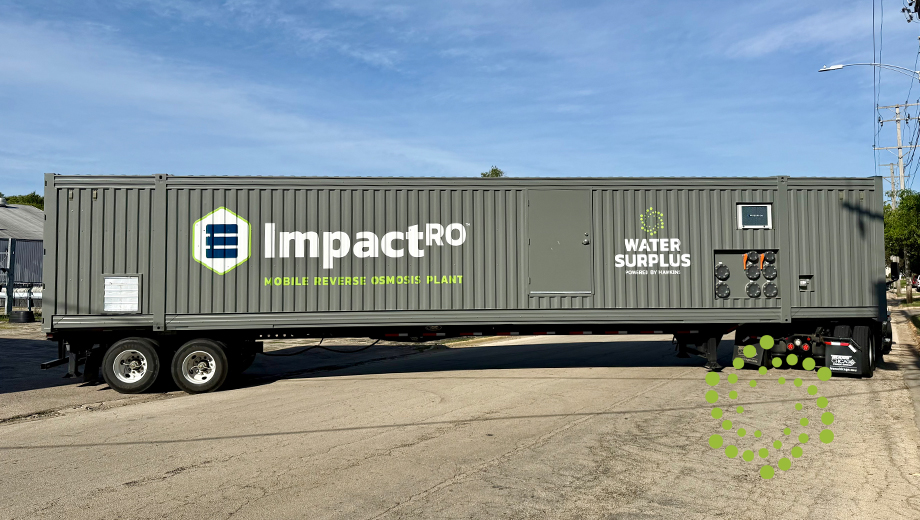
The term mobile water treatment is used loosely, and the equipment it describes varies considerably. At one end are trailer-mounted or skid-based systems that can be transported, connected to an existing water source, and brought online in a matter of days. At the other are containerized treatment trains capable of handling complex chemistry, multiple contaminant targets, and sustained high-volume operation over months or years.
What they share is the ability to deliver treatment capacity without the lead time, permitting complexity, and capital commitment of permanent infrastructure. That shared capability is why temporary and rental water treatment systems are useful across a range of situations where conventional construction timelines don’t align with operational or compliance realities.
Technology selection within mobile systems mirrors the broader water treatment landscape. Reverse osmosis, ion exchange, granular activated carbon, ultrafiltration, nanofiltration, and combinations of these can all be deployed in mobile or containerized configurations. The right technology depends on the application, the contaminant target, and the water quality requirements the treated output needs to meet.
Municipal Applications
Compliance Gaps and Regulatory Timelines
Municipal water systems facing new or tightening regulatory requirements frequently run into a mismatch between compliance deadlines and the time required to design and build permanent treatment infrastructure. Regulatory timelines don’t pause while engineering is completed, permits are issued, and construction moves forward.
Mobile treatment systems allow utilities to achieve compliant operation now while permanent infrastructure works through that process. That rental-to-permanent pathway has become a standard approach for utilities navigating PFAS compliance under the EPA’s 2024 MCL framework, where enforceable limits for compounds like PFOA and PFOS are as low as 4 parts per trillion. Many systems need treatment they don’t yet have, and they need it before construction timelines can deliver it.
WaterSurplus installed Wisconsin’s first three PFAS removal systems approved by the state DNR, deploying anion exchange resin-based rental systems that went online in 2022 and 2023, bridging the gap for utilities that needed compliant water output while full-scale permanent plants were designed and built.
That model of interim treatment capacity holding the line while permanent infrastructure catches up applies well beyond PFAS. Any utility facing a compliance clock that outpaces its construction timeline is a candidate for this approach.
Emergency Response and System Failures
When a treatment system goes offline, the constraint is immediate: no compliant water output. The ability to stage and deploy a mobile system quickly is the defining advantage here. The alternative is serving a community without treated water or under a boil order.
In April 2024, an EF-3 tornado destroyed the water treatment plant in Minden, Iowa. WaterSurplus had filtration systems on the road within 48 hours. As WaterSurplus President John Barelli put it: “Without that inventory, the people of Minden would have been without clean water for much longer.” The deployment, coordinated with the Iowa Rural Water Association, restored treatment capacity while the town worked through what could be a years-long process to replace its permanent facility.
Natural disaster events compound the challenge. In September 2024, Hurricane Helene caused extensive flooding and infrastructure damage across western North Carolina, forcing the University of North Carolina Asheville to close temporarily. WaterSurplus deployed a mobile treatment system capable of producing up to 280,000 gallons of potable water per day, working in partnership with Onsite Water Management and the U.S. Army Corps of Engineers to restore essential water services and support the university’s reopening.
Source water quality in disaster scenarios frequently adds another layer of complexity. Flooding, contamination, and compromised supply infrastructure can change what a mobile system needs to treat, which is why systems that can be configured for variable conditions matter in these deployments.
Seasonal Demand and Source Water Variability
Some municipal systems face treatment demand that varies significantly across the year. Seasonal population growth, agricultural runoff events, or source water quality shifts that require additional capacity during specific periods can create operating challenges for fixed infrastructure sized around average rather than peak conditions.
Rather than building permanent infrastructure for worst-case scenarios that materialize only part of the year, mobile or rental systems can augment existing capacity when and where it’s needed. The same logic applies to source water variability: systems managing turbidity spikes, algae events, or other conditions that create temporary treatment challenges benefit from the ability to bring in additional capacity on a defined timeline.
Acute source water crises follow a similar pattern. In summer 2023, below-normal water volumes in the Mississippi River allowed a saltwater surge to move north from the Gulf of Mexico, threatening water treatment systems along the lower river designed for freshwater intake. WaterSurplus coordinated with the U.S. Army Corps of Engineers to deploy reverse osmosis systems capable of producing more than four million gallons of potable water per day to address the crisis, drawing on a rental fleet that could be mobilized quickly at scale.
Industrial Applications
Process Water and Production Continuity
Industrial facilities often face water treatment requirements tied directly to production. Process water that doesn’t meet quality specifications affects product quality. Treatment systems that go offline or underperform create production constraints with immediate financial consequences.
Mobile treatment provides a path to maintain continuity during planned maintenance, equipment failures, or capacity expansions. A facility that needs to take a primary treatment system offline for repairs can bring in temporary water treatment capacity to bridge the gap rather than curtailing production. That operational value is often significant relative to the cost of a rental system.
It also applies to facilities ramping production beyond their existing treatment capacity. Skid-mounted or containerized systems can provide interim capacity while permanent infrastructure expansion is engineered and installed, allowing production to continue without waiting on construction completion.
Wastewater, Discharge Management, and Remote Operations
Facilities managing industrial wastewater face discharge permit requirements that establish limits on what can be released to sewer, surface water, or other discharge points. When production volumes increase, water chemistry changes, or permit limits tighten, existing treatment infrastructure may no longer be sufficient.
Mobile treatment can address those gaps on a temporary basis while permanent solutions are evaluated and installed. It also supports facilities working through discharge minimization strategies, where mobile high-recovery reverse osmosis or other concentration technologies serve as an upstream stage in a broader wastewater management approach.
Remote and off-grid operations present a related but distinct challenge. Construction projects, mining operations, and remote industrial sites often require self-contained water management, treating available sources to meet process or potable quality requirements, and managing wastewater to meet discharge or reuse standards without connection to permanent infrastructure. Containerized systems that can be transported by truck and operated off generator power are a common configuration in these environments.
Industrial applications across all of these contexts typically involve more complex chemistry than municipal drinking water treatment. Elevated dissolved solids, co-contaminants, variable loading, and process-specific water quality requirements all shape what a workable mobile treatment configuration looks like, and make application-specific engineering evaluation especially important.
Pilot Testing and Process Evaluation
Before committing to a permanent treatment technology or configuration, many facilities use mobile or pilot-scale systems to evaluate performance under actual site conditions. Bench-scale testing and modeling provide value, but they don’t fully replicate the variability of production-scale operation with real feedwater.
Mobile pilot systems allow facilities to generate performance data, optimize operating parameters, and build the operational experience needed to make confident decisions about permanent system design. In complex industrial applications involving multiple contaminants, unusual chemistry, or unfamiliar treatment technologies, that data collection phase can significantly reduce the risk of a permanent system that underperforms.
What Drives Mobile Treatment Deployment Decisions
Most decisions to deploy a mobile treatment system rather than pursue permanent construction immediately come down to one or more of three practical realities: timeline, certainty, and capital. Understanding which one is driving the decision usually clarifies whether mobile treatment is the right call, and for how long.
Timeline is the most common driver. Permanent infrastructure takes time: engineering, permitting, procurement, construction, and commissioning can extend from months to years depending on project complexity and the regulatory environment. When treatment need exists now and permanent infrastructure can’t deliver on that timeline, mobile deployment fills the gap.
Certainty matters in situations where the long-term treatment requirement isn’t fully defined. A facility evaluating technology options for a new discharge challenge may not want to commit to permanent infrastructure before understanding what will actually work at scale. Temporary deployment provides the operational data needed before permanent capital decisions are made.
Capital considerations influence decisions in both municipal and industrial environments. A utility that needs compliant water immediately while managing a budget that can’t accommodate both interim and permanent infrastructure simultaneously may find rental the only workable path. For industrial facilities with temporary or defined-duration needs, rental economics often make more sense than equipment purchase.
Common Concerns About Mobile Water Treatment
Organizations evaluating mobile treatment for the first time tend to ask the same set of questions. They’re reasonable ones, and the answers are worth laying out directly.
Is mobile treatment as reliable as permanent infrastructure? Well-engineered mobile systems operate with the same treatment technologies and control systems as permanent installations. The distinction is physical configuration and deployment model, not treatment capability. That said, service coverage, maintenance response, and operator support matter more in mobile deployments than they do for permanent installations.
Will regulators accept a mobile or rental system? Generally yes, provided the system meets applicable treatment standards and the output meets permit or MCL requirements. WaterSurplus systems have received state regulatory approval in multiple jurisdictions for both municipal drinking water and wastewater applications. The specifics vary by state and application type, and early engagement with the relevant regulatory authority is advisable for any compliance-driven deployment.
What does mobile treatment cost relative to permanent infrastructure? Rental economics depend heavily on duration and application. For short-term needs, temporary deployments are typically far more cost-effective than purchasing and installing permanent equipment. Over longer timeframes, the calculus shifts. Many utilities and facilities use rental systems as a bridge, managing costs during the period when permanent infrastructure is being developed, then transitioning once it’s online.
Is there a risk of long-term dependency on rental treatment? This is a real consideration. Mobile treatment works best when it’s tied to a defined plan for what comes next: a construction timeline, a capital decision, a permit milestone. Where that longer-term context is missing, the economics and operational dynamics of indefinite rental become harder to justify. The most effective deployments are those where the mobile system has a clear job and a defined endpoint.
Operational Considerations for Mobile Treatment
Mobile water treatment systems are not simply smaller or simpler versions of their permanent counterparts. Deploying one successfully involves practical considerations as important as the treatment technology itself.
Site logistics matter more than they might appear. Trailer-mounted systems require access for delivery vehicles and adequate space for setup. Containerized systems need suitable ground conditions and lifting equipment. Connection to water supply, power, and discharge points adds to site preparation requirements. Systems that look straightforward on paper can become complicated when actual site conditions are factored in.
Feedwater characterization is essential before any treatment system is deployed, mobile or permanent. The same technology can perform very differently depending on source water chemistry, and systems configured for one set of conditions may not perform adequately if those conditions change. In emergency or rapid-response deployments there is often pressure to move faster than thorough characterization allows. That pressure is understandable, but skipping it creates risk.
Mobile Treatment as Part of a Longer-Term Strategy
Mobile water treatment delivers the most value when it’s doing a specific job within a framework that includes a clear picture of what comes next. Mobile treatment is not a replacement for permanent infrastructure. It is a strategic tool that allows utilities and industrial operators to maintain compliance, protect production, and reduce risk while longer-term decisions and investments take shape.
In many cases, getting that match right requires engineering evaluation of the application before deployment. The right configuration, the right technology, and the right service model depend on understanding the operating context, not just the treatment objective.
If you’re evaluating mobile or rental water treatment for a municipal or industrial application, WaterSurplus’s engineering team can help assess deployment options, technology fit, and system considerations for your specific situation.
Frequently Asked Questions
What types of water treatment technology are available in mobile configurations?
Most established water treatment technologies can be deployed in mobile or rental configurations, including reverse osmosis, ion exchange, granular activated carbon, ultrafiltration, and nanofiltration. The right technology depends on the contaminant target, water quality requirements, and application-specific constraints.
How quickly can a mobile water treatment system be deployed?
Deployment timelines vary depending on system complexity, site conditions, and required permitting. Trailer-mounted and skid-mounted systems can often be operational within days of arriving on site. In acute emergencies, WaterSurplus has mobilized filtration systems within 48 hours of a disaster event. More complex containerized systems or applications requiring significant site preparation may take longer.
Is mobile water treatment appropriate for drinking water applications?
Yes. Mobile and rental treatment systems are regularly used by municipal utilities to maintain compliant drinking water operation during compliance transitions, system failures, and emergency events. Systems deployed for drinking water applications must meet applicable regulatory standards for the treated water output, and regulatory approval pathways vary by state.
What is the difference between renting and purchasing a mobile water treatment system?
Rental provides treatment capacity for a defined period without the capital commitment of equipment purchase. It is most appropriate for temporary needs with a defined endpoint, compliance bridging while permanent infrastructure is developed, or applications where the long-term treatment requirement isn’t fully established. Purchasing makes more sense for ongoing or indefinite treatment needs where ownership economics are more favorable over the relevant time horizon.
Can mobile systems handle industrial wastewater with complex chemistry?
Yes, though application-specific engineering evaluation is important. Industrial wastewater applications involving elevated dissolved solids, co-contaminants, variable loading, or process-specific chemistry require careful system configuration and pretreatment design. Mobile systems are available in configurations capable of handling complex industrial streams, but performance depends on matching the system design to the actual feedwater conditions.
How does mobile water treatment fit into a Zero Liquid Discharge strategy?
Mobile high-recovery reverse osmosis and concentration technologies can function as an upstream stage in a ZLD or near-ZLD treatment architecture, reducing liquid volume before downstream solids-handling processes. Mobile deployment in this context may support facilities evaluating discharge minimization strategies before committing to permanent ZLD infrastructure.
What should I evaluate before deploying a mobile water treatment system?
Key considerations include feedwater characterization, treatment objectives and target water quality, flow requirements, site logistics and utility connections, regulatory requirements for the treated output and any discharge, operator support and service coverage, residuals management, and the intended duration and endpoint of the deployment.
Search
Recent Posts
- Mobile Water Treatment Systems: Industrial & Municipal Use Cases
- PFAS Treatment Systems: Key Considerations for Municipal and Industrial Applications
- High-Recovery Reverse Osmosis Systems: Reducing Wastewater and Operating Costs
- WaterSurplus Joins Kaukauna Utilities Groundbreaking for New ImpactRO Water Treatment System
- WaterSurplus Brings ImpactRO to the Municipal Market
Categories
- Brand Posts
- Engineering Posts
- Environmental Industry Posts
- Fabrication Posts
- Food & Beverage Industry Posts
- Industrial Water & Wastewater Industry Posts
- Industry Posts
- Innovation Posts
- Mining Industry Posts
- Municipal Industry Posts
- News Releases
- Oil & Gas Industry Posts
- Product Posts
- Project Posts
- Rental Posts
- Selling To Us Posts
- Service Posts
- Surplus Posts
- Sustainability Posts
- Team Posts
- Technology Posts
- Water Reuse Industry Posts
